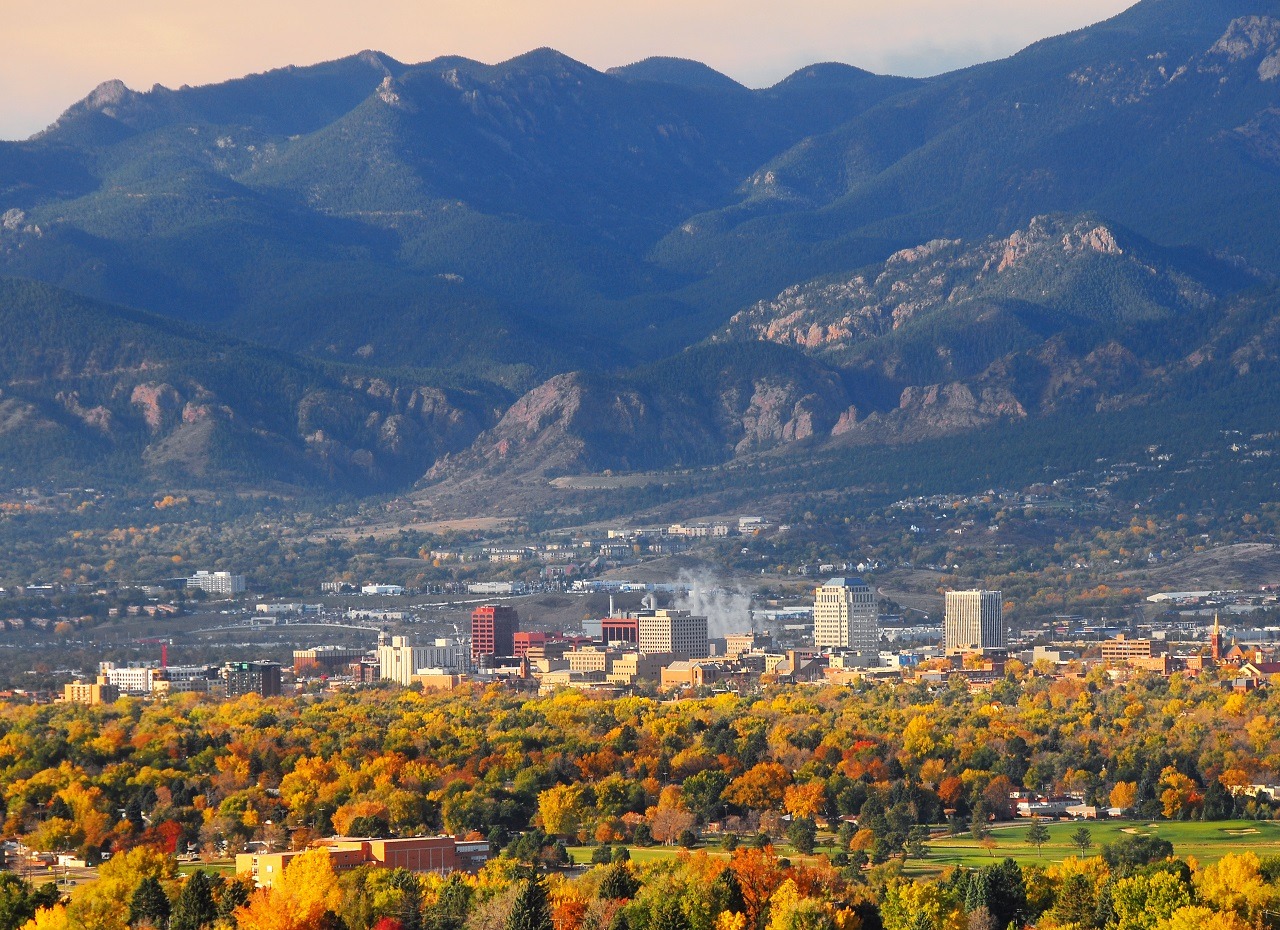
Fruita sits at the western edge of Mesa County, a few miles from the Utah line, where irrigated orchard ground meets a small commercial core built around Kokopelli mountain biking traffic and I-70 travelers. A seller here is rarely trading a downtown office tower. More often it is a piece of ag-adjacent land, a small retail building on Aspen Avenue, or a light-industrial parcel near the interstate interchange, and the replacement search should start from that same base rather than from a generic Grand Junction comparison.
An Economy Split Between Orchards And The Interstate
Fruita's commercial footprint runs in two directions. Highway 6 and 340 through town carry the older retail and service buildings that predate the interstate, tenanted by local contractors, feed and farm suppliers, and small restaurants. The I-70 interchange corridor carries a newer layer: gas and convenience sites, lodging, and light-industrial buildings that lean on truck traffic and the recreation economy built around the Kokopelli trail system and Colorado National Monument visitors.
Neither corridor trades in volume. A seller identifying replacement property inside 45 days needs to know which of these two categories a candidate actually belongs to, because financing and tenant risk differ sharply between them.
Irrigated Land Carries Its Own Exchange Questions
Orchard and irrigated farmland near the Colorado River and Kannah Creek is common in a Fruita seller's portfolio, and it raises questions a metro exchange rarely has to answer: whether water rights transfer with the land, how a ditch company's assessment affects net income, and whether a buyer intends to keep the ground in production or pursue a different use. None of that changes the like-kind analysis, since real property held for investment or business use qualifies regardless of whether it grows peaches or holds a warehouse, but it does change how quickly a qualified intermediary and lender can move.
Where Fruita Sellers Look For Replacement Property
Because the local commercial base is thin, most Fruita exchanges pair a local candidate with a broader Grand Junction or Montrose search from the start rather than treating the wider market as a fallback.
- Small retail or flex buildings along the Highway 6 and 340 corridor inside Fruita itself
- Interstate-adjacent land or buildings near the I-70 interchange tied to travel and recreation traffic
- Multifamily or light-industrial product in nearby Grand Junction, where inventory runs deeper
- Agricultural or irrigated ground elsewhere in the Grand Valley, where water rights and soil quality carry over
- A DST or NNN sponsor placement when the seller wants to step away from land management entirely
Sequencing The File For A Thin Market
The practical sequence starts before the relinquished sale closes: a qualified intermediary engaged, a lender contacted about financing on whichever category of replacement property is most likely, and a first look taken at both local and Grand Junction candidates. Waiting until after closing to start that search is the most common way a Fruita exchange runs short on identification-window time, since a single missed listing here can mean there is no second local option to fall back on.
At closing, the file should document why each candidate was chosen, what backup was named under the three-property or 200% rule, and how any water rights or ditch assessments were handled, so the seller's CPA has a clean record for Form 8824 rather than a set of loose notes.
Common 1031 Exchange Questions
Does farmland near Fruita qualify as like-kind for a 1031 exchange
Yes, as long as it was held for investment or business use rather than personal use. Irrigated orchard ground can exchange into a commercial building or into other farmland, since like-kind treatment covers real property broadly rather than requiring the same use or asset type.
What happens to water rights when a Fruita property sells as part of an exchange
Water rights tied to a ditch company or an irrigation district need to be confirmed separately from the real estate title, since they can be conveyed with the land, held back by the seller, or subject to a ditch company transfer process that takes time. That confirmation should happen early, not during the final week of the 45-day window.
Why do most Fruita exchanges also search Grand Junction
Fruita's own commercial inventory is small, so a seller who only looks locally risks reaching day 45 with a single untested candidate. Pairing a local search with a Grand Junction look from the outset gives the identification notice a genuine backup rather than a placeholder.
Is a DST placement a realistic option for a Fruita landowner
Often yes, particularly for a seller who wants to step back from irrigation scheduling, ditch assessments, or tenant farming arrangements. A DST or NNN sponsor placement removes that management layer while keeping the proceeds in a qualifying real estate structure.
Does this coordination cover tax advice for a Fruita exchange
No. It covers market context, sourcing, and documentation sequencing. Tax treatment, water rights transfer questions, and any debt or boot calculations should go through the seller's CPA, water attorney where relevant, and lender.