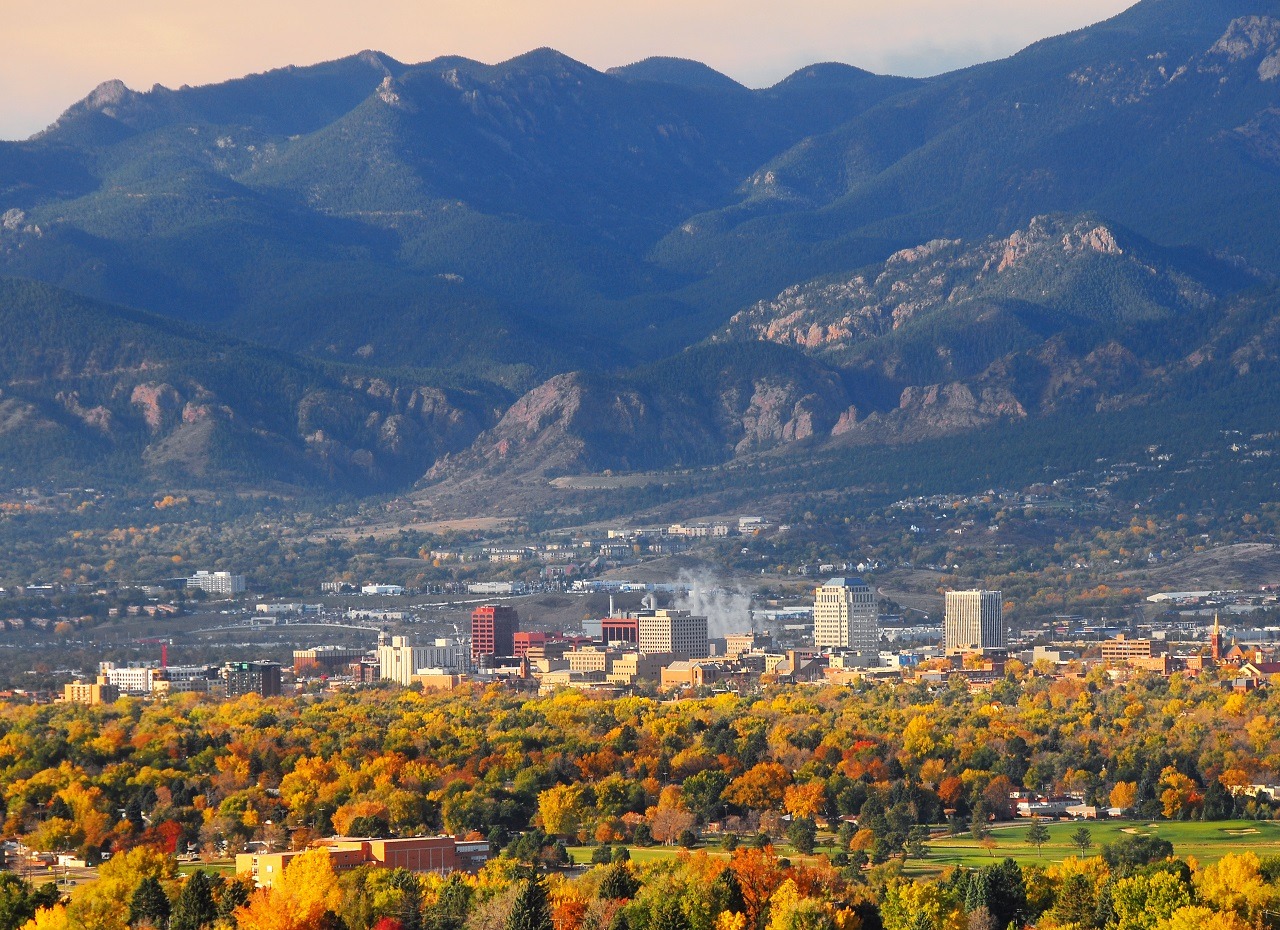
Boulder's exchange challenge is not finding a buyer for the relinquished property. It is finding a qualifying replacement inside a market that has spent decades deliberately limiting new supply.
A Market Built To Stay Small
Boulder's blue line growth boundary and long-standing open space program have kept development inside a fixed footprint for years, while the 55-foot height limit caps how much square footage a given parcel can ever produce. That combination has made Boulder office, lab, and flex space some of the tightest inventory on the Front Range, with owners often holding buildings for long stretches rather than trading them.
Sellers here are typically moving out of office and flex buildings along the 28th Street or Diagonal Highway corridors, small multifamily near the University of Colorado campus, or mixed-use property closer to Pearl Street. Each of those categories has its own tenant base, and none of them has much depth of available replacement inventory sitting on the market at any given time.
Why Scarcity Changes The Identification Strategy
A seller cannot count on a like-kind Boulder replacement surfacing inside the 45-day identification window just because one is needed. The file should include a serious national or regional comparison from the outset, whether that means DST placement, net-lease retail, or industrial property in a market with faster turnover, rather than waiting to see what appears locally before considering alternatives.
High basis is common on long-held Boulder assets, which raises the cost of a failed exchange. Boot exposure from any financing gap in the replacement purchase should be modeled with the seller's CPA well ahead of the 180-day acquisition deadline, not discovered at closing.
The federal research presence in Boulder, including labs tied to atmospheric and standards research, has also anchored a steady base of well-funded tenants for nearby office and flex space over many years. A replacement candidate that depends on that same institutional tenant base carries a different risk profile than one leased to an early-stage startup, and the file should distinguish between the two rather than treating all Boulder office space as equivalent.
Retail along Pearl Street and in the surrounding neighborhood centers tends to serve a mix of tourism traffic and local resident spending, which gives it a demand profile somewhat insulated from the office sector's swings. A seller weighing a retail replacement against an office replacement in Boulder should treat those two categories as separate markets with separate risk factors.
Lender And Environmental Diligence Move Slower Here
Entitlement questions, environmental review, and lender comfort with Boulder's zoning constraints can all take longer than a standard suburban transaction, which eats into a calendar that is already short. A seller should have a lender conversation started before a specific candidate becomes the primary identification, not after.
Backup candidates carry real weight in Boulder exchanges because a single property falling through, whether from financing delay or title complication, can leave very little local inventory left to consider before the acquisition period closes.
Where Boulder Proceeds Actually Tend To Land
Given how tight local inventory runs, Boulder sellers frequently split their attention between a narrow set of local candidates and a wider national search from day one.
- A university-adjacent multifamily property kept local for continued renter demand near campus
- Office or flex space along 28th Street or the Diagonal Highway corridor, when available
- A Longmont or Broomfield property reviewed as a lower-cost, faster-closing alternative
- A DST or net-lease sponsor placement chosen because local supply could not fill the identification list
- A national industrial or multifamily position taken to preserve exchange eligibility on schedule
Keeping The File Coherent Through Closing
Longmont, Broomfield, Golden, Denver, and Fort Collins commonly show up in Boulder exchange comparisons, not because they resemble Boulder, but because they offer transaction volume and pricing evidence the local market cannot always match on a fixed timeline. The file should record why each was considered and whether it moved beyond a reference point.
After closing, the record should hold up for the seller's CPA preparing Form 8824: identification letters, qualified intermediary correspondence, settlement statements, and notes on why the final replacement, local or otherwise, was the one that closed.
Common 1031 Exchange Questions
Why is Boulder replacement property so hard to find?
Growth boundaries, open space policy, and height limits have kept new commercial supply scarce for years, and existing owners tend to hold Boulder property for long periods. Investment-grade listings turn over slowly compared with less constrained Front Range markets.
Do Boulder sellers have to replace with Boulder property?
No. Like-kind treatment covers qualifying real property anywhere in the United States. Many Boulder sellers compare Longmont, Broomfield, or Denver options, or a DST and net-lease structure, specifically because local Boulder inventory cannot fill the identification window fast enough.
How does Boulder's zoning affect exchange timing?
Entitlement questions and environmental review can move slower here than in a standard suburban transaction, which shortens the effective runway inside the 45-day identification and 180-day acquisition periods. Starting lender conversations early helps offset that delay.
What happens if the only strong local Boulder candidate falls through?
The seller relies on backup candidates that were already vetted in writing, whether local or in a comparison market like Longmont or Broomfield. Because Boulder inventory is thin, backup planning should start alongside the primary search, not after a problem appears.
Does this page offer tax advice for Boulder property owners?
No. It covers market conditions, timing, and coordination. Boot calculations, tax exposure, and financing decisions should be reviewed with the seller's own CPA, attorney, and lender before any replacement property is finalized.