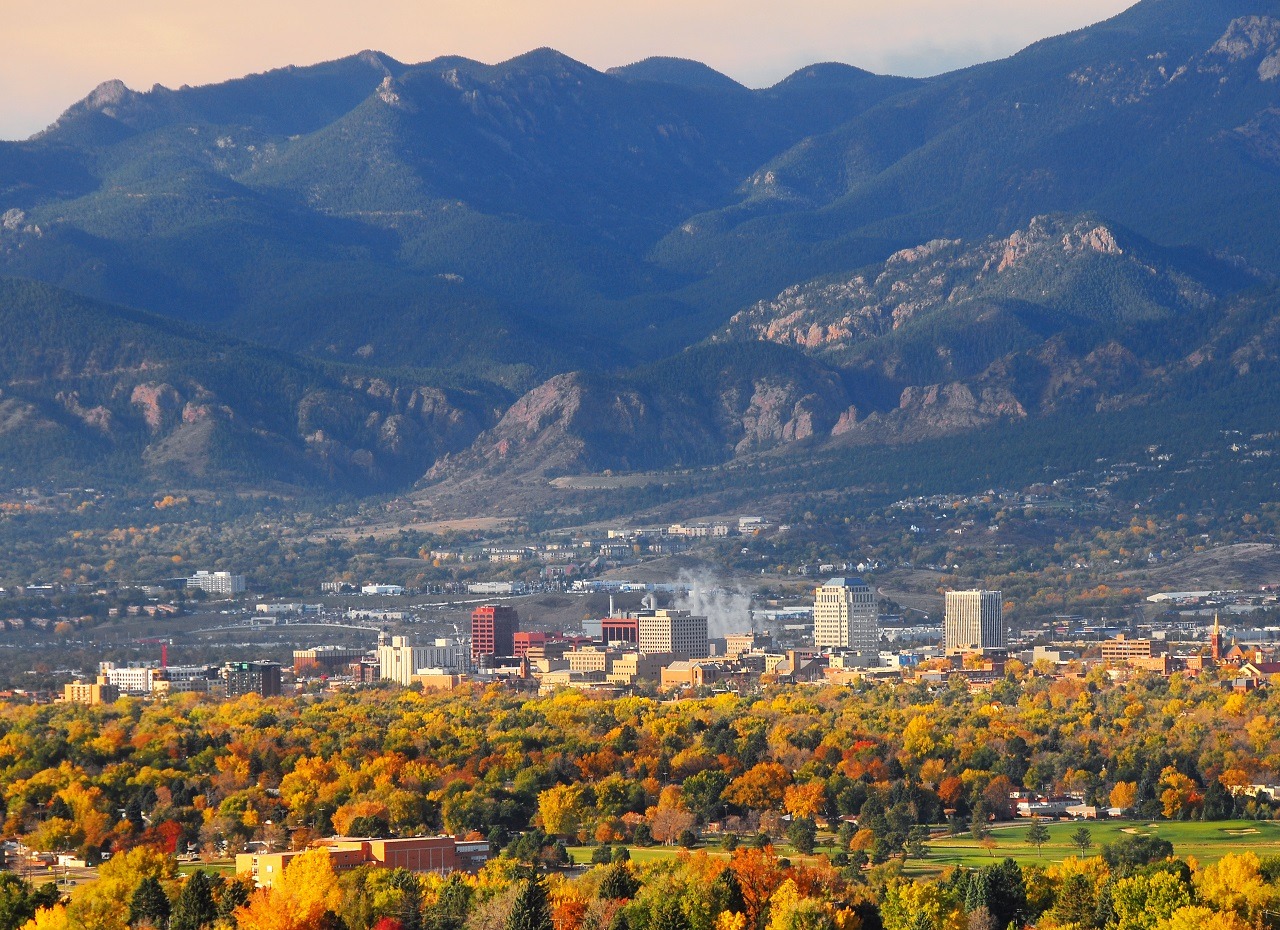
Colorado is not one exchange market. A property near Union Station in Denver, a ranch parcel on the Eastern Plains, and a condo-hotel interest in a ski town all run on the same federal deadlines but trade in completely different ways.
Three Very Different Regions, One Set Of Deadlines
The Front Range, running roughly from Fort Collins through Denver and Colorado Springs to Pueblo, holds most of the state's population and most of its investment-grade commercial inventory: office, industrial, multifamily, and retail all trade here in real volume. The mountain resort towns, from Vail to Aspen to Breckenridge, run on a much thinner supply of hospitality-adjacent and mixed-use commercial property, priced high and traded rarely. The Western Slope and Eastern Plains hold agricultural land, small commercial buildings, and service-hub retail tied to regional rather than statewide demand.
A seller relinquishing property in any of these regions should build a replacement plan around that region's actual trading pattern, not a statewide average that does not describe any specific market well.
Why Regional Character Changes Identification Strategy
A Front Range seller usually has enough local inventory to fill the 45-day identification list with genuine local candidates, backed up by regional or national alternatives. A resort-town seller often needs to lean on national DST or net-lease options from day one, since local commercial inventory turns over too slowly to count on. A Western Slope or plains seller may need to look toward a Front Range city or a national sponsor placement simply because local commercial trading volume is thin.
None of these situations is a problem to solve the same way. Each requires an identification strategy that reflects what actually exists to buy in that part of the state, not a plan copied from a different region.
A seller relinquishing agricultural land on the Eastern Plains, for example, may find almost no like-kind farmland trading nearby in a given year, which pushes the search toward a Front Range city or a national DST sponsor almost by default. A Front Range seller rarely faces that same constraint, since office, industrial, and multifamily inventory turns over in real volume most months.
Coordinating Across Advisors In A State This Spread Out
A qualified intermediary, lender, CPA, and broker should be aligned on the file before the relinquished property closes, regardless of which Colorado region is involved, but the specific questions each advisor needs to answer will differ. A Denver metro lender preflight conversation looks nothing like one focused on resort-market financing or agricultural land value, and the identification strategy itself has to follow that same regional split rather than a single statewide template.
Backup planning also looks different by region. A Front Range seller can usually name several genuine local backups; a resort-town or rural seller may need more national backup options simply because local supply cannot cover every scenario.
Common Replacement Paths Across The State
Sellers across Colorado end up choosing from a similar set of paths, weighted differently depending on the region where the relinquished property sits.
- Staying within the same Front Range metro for continued local management and lease familiarity
- Moving from a resort or rural market into a Front Range acquisition for deeper trading volume
- Placing proceeds into a DST or NNN sponsor program when local supply cannot fill the identification list
- Trading into multifamily, industrial, or medical office in a different Colorado metro for diversification
- Comparing several Colorado markets side by side before deciding whether to stay in-state at all
What A Statewide File Should Document
Denver, Colorado Springs, Boulder, Fort Collins, and Grand Junction represent different points on the state's trading spectrum, from deep Front Range inventory to thinner Western Slope supply, and each may serve as a comparison market depending on where the relinquished property sits. The file should record why each region was considered and how its trading pattern shaped the decision.
After closing, the record should still explain the reasoning behind the final choice: identification letters, qualified intermediary correspondence, lender documentation specific to the replacement region, and notes tying the decision back to the relinquished property's original region. That is what makes Form 8824 preparation coherent rather than a reconstruction project.
Common 1031 Exchange Questions
Why does Colorado's geography matter for a 1031 exchange?
Front Range metros, mountain resort towns, and Western Slope or plains markets trade on very different inventory levels and demand drivers. An identification strategy shaped for one region's pattern often does not fit another.
Does a Colorado seller have to replace within the state?
No. Like-kind treatment covers qualifying real property anywhere in the United States. Many Colorado sellers, particularly in thinner resort or rural markets, use DST or net-lease structures precisely because local supply cannot fill the identification window.
Why do resort towns need more backup candidates than Front Range cities?
Resort-market commercial inventory turns over slowly and trades in low volume, so a single primary candidate falling through can leave little else to consider locally. Front Range metros generally support a deeper bench of realistic local backups.
What should be ready before any Colorado relinquished property closes?
A qualified intermediary agreement, a lender contact suited to the target region's financing norms, and a short list of candidates that reflects how that specific region actually trades, not a generic statewide assumption.
Does this page provide tax advice for Colorado property owners?
No. It addresses regional market conditions, timing, and coordination. Tax treatment, boot exposure, and financing decisions should be confirmed with the seller's own CPA, attorney, and lender.