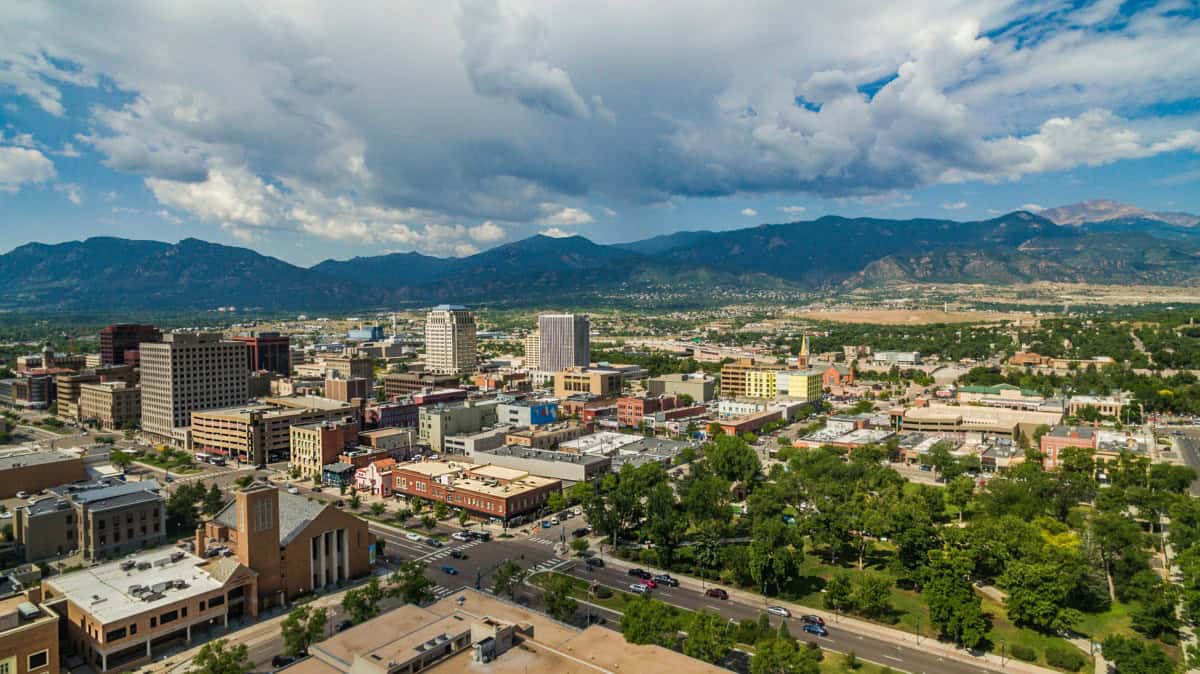
Sometimes the strongest replacement property is not the property that exists today but the property that exists after construction. An improvement exchange, also called a build-to-suit exchange, lets an investor use exchange funds to construct improvements on the replacement property, rather than simply purchasing it as-is, and count the finished, improved value toward satisfying the exchange. A Colorado investor selling a fully stabilized Denver metro property might use this structure to acquire raw or underbuilt land along the Front Range and add the exact building the tenant base or investment plan calls for, funded with exchange proceeds rather than outside capital.
Why Title Has to Sit With an EAT During Construction
Because exchange funds cannot pass through the investor's control without triggering constructive receipt, an improvement exchange requires the same parking mechanism used in a reverse exchange: an exchange accommodation titleholder takes and holds title to the replacement property while construction proceeds, using exchange funds released by the qualified intermediary to pay contractors, materials, and other project costs. The investor directs and oversees the construction, but the EAT holds legal title until the property is transferred into the investor's name once the exchange is complete.
This structure is what allows improvement dollars to count as part of the exchange in the first place. Without an EAT parking title during construction, funds spent on improvements after the investor already owned the property would not qualify as part of the like-kind exchange.
The 180-Day Construction Constraint
Every improvement funded through the exchange, and every dollar of exchange proceeds spent on that improvement, has to be complete and in place by day 180. This is the structural limit that makes an improvement exchange demanding: construction that runs even slightly past the deadline means the unfinished portion no longer counts as exchange value, and any exchange proceeds not actually converted into completed, in-place improvement by day 180 are treated as boot rather than deferred gain. A Colorado investor planning a build-to-suit industrial building or medical office needs a construction timeline with real contingency built in, not a schedule that only works if every permit, inspection, and material delivery lands on time.
Front Range projects generally move through permitting and inspection faster than more rural Western Slope or mountain-resort jurisdictions, where staffing and seasonal weather can slow both permitting and physical construction, and that timing difference has to be factored into whether a 180-day improvement exchange is realistic for a given project location.
What Value Counts Toward the Exchange
The land or existing structure value plus the value of improvements actually completed by day 180 together make up the replacement property's exchange value, and that combined figure needs to be equal to or greater than the relinquished property's value to fully defer the gain. Improvements that are only partially finished, such as a shell building with unfinished interior buildout, count only at their completed value on day 180, not their projected value once eventually finished outside the exchange window.
When This Structure Makes Sense
Improvement exchanges tend to make the most sense when an investor is trading out of a fully built, income-producing Colorado property and into land or a property that genuinely needs work to reach comparable value or usability, rather than as a way to simply add cosmetic upgrades to an otherwise adequate replacement property. Given the construction timeline pressure layered on top of the standard 180-day deadline, this structure benefits from having contractors, permitting timelines, and an exchange accommodation titleholder lined up well before the relinquished property closes.
A general contractor with prior experience building against an exchange deadline, rather than a standard project timeline, tends to be worth the search, since scheduling decisions on the job site have real tax consequences here in a way an ordinary construction project does not carry. Lining up permitting review, material lead times, and inspection scheduling before the relinquished sale even closes gives the construction side of the exchange the best chance of finishing cleanly inside the 180-day window.
Common Questions
Can exchange funds be used to build a new structure from the ground up?
Yes, as long as an exchange accommodation titleholder holds title to the property during construction and the improvements are complete and in place by day 180, ground-up construction funded with exchange proceeds can qualify as replacement property value.
What happens if construction is not finished by day 180?
Only the value actually completed and in place by day 180 counts toward the exchange, and any exchange proceeds spent on work that remains unfinished at that point are generally treated as boot rather than deferred gain.
Why does an exchange accommodation titleholder need to hold title during construction?
Because exchange funds cannot pass through the investor's own control without triggering constructive receipt, so the EAT holds legal title and directs fund disbursement for construction costs until the property transfers to the investor at the close of the exchange.
Is an improvement exchange the same as a reverse exchange?
They share the same parking mechanism through an exchange accommodation titleholder, but a reverse exchange addresses acquiring the replacement property before the relinquished property sells, while an improvement exchange specifically addresses funding construction with exchange proceeds.
Do improvement exchanges cost more to set up than a standard forward exchange?
Yes, generally, since the parking structure, construction fund disbursement process, and coordination between the exchange accommodation titleholder and contractors add cost and complexity beyond a standard forward exchange without a build component.